
Decoration Day
and the art of remembrance

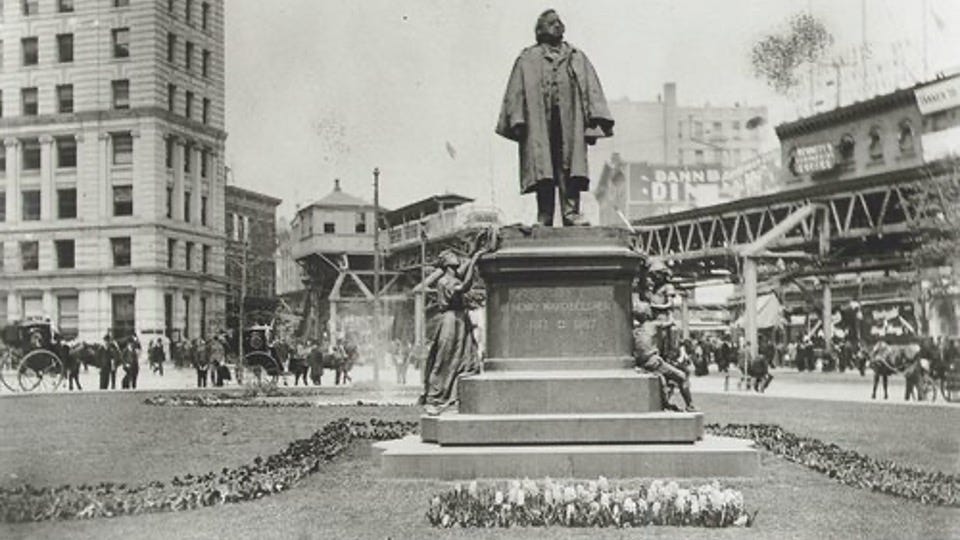
If you’ve ever heard me lecture on Brooklyn Heights or taken a tour with me there, you are surely familiar with this statue:
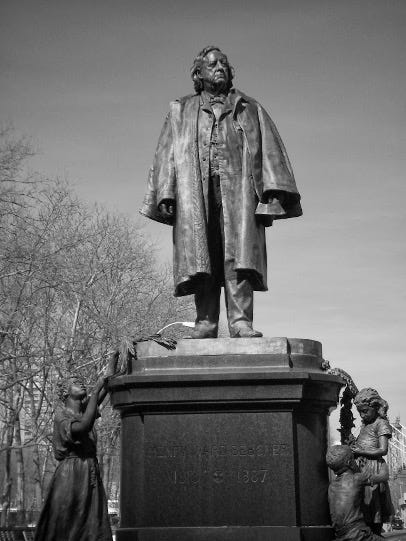
The statue is by John Quincy Adams (J.Q.A.) Ward and the fellow it depicts is Henry Ward Beecher. And while many people today are more familiar with his sister, Harriet Beecher Stowe, author of Uncle Tom’s Cabin, in his own lifetime Beecher was arguably the most famous man in America. His influence spread far beyond his own pulpit at Plymouth Church on Orange Street in the Heights, and among white Protestant clergymen, few abolitionists had comparable public reach.
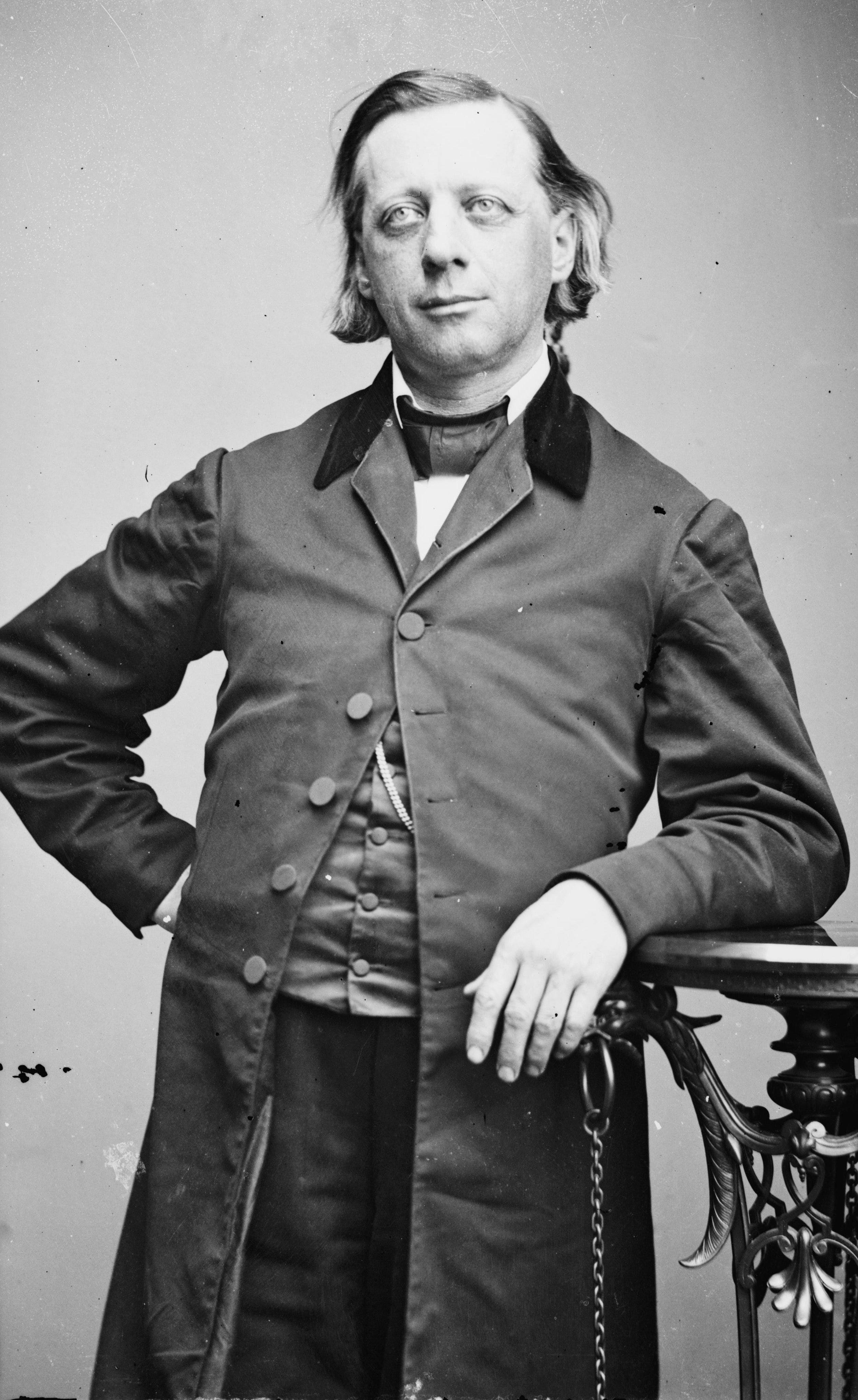
Henry Ward Beecher was born in Litchfield, Connecticut, on June 24, 1813, the son of prominent Congregationalist minister Lyman Beecher. He was educated at Amherst and Lane Theological Seminary, and spent the first decade of his preaching career in Indiana—then still very much the frontier.
In 1847, he was called to be the minister of the newly created Plymouth Church in Brooklyn Heights, and he remained their leader until his death in 1887.
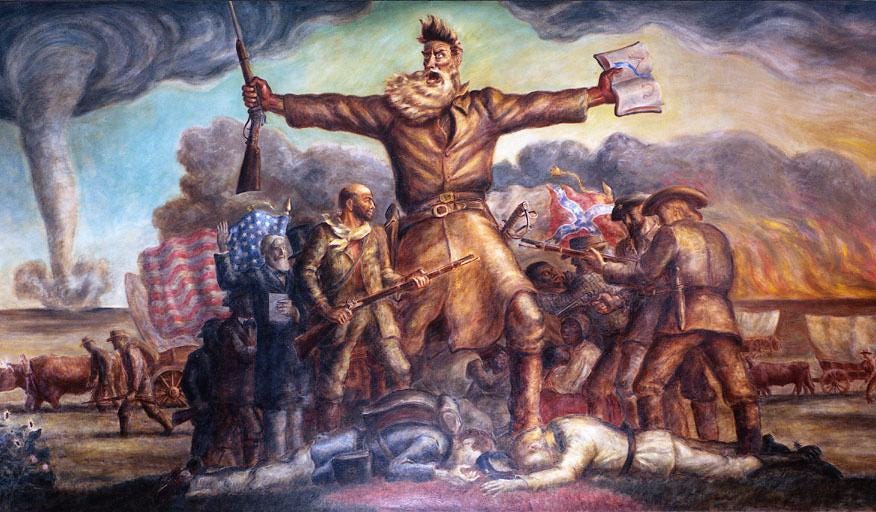
In the run-up to the Civil War, Beecher’s commitment to the abolitionist cause grew steadily. Through the 1850s, as the country became increasingly divided over the Fugitive Slave Act and the looming sectional crisis, Beecher raised money to send rifles—nicknamed “Beecher’s Bibles”1—to anti-slavery settlers in Kansas. (The argument was that a Sharps rifle was, in this instance, more urgently needed than scripture.)
Beecher was also famous for the mock slave auctions he held at the church where his congregation—often a capacity 2,500 people—would literally purchase the freedom of enslaved Africans.
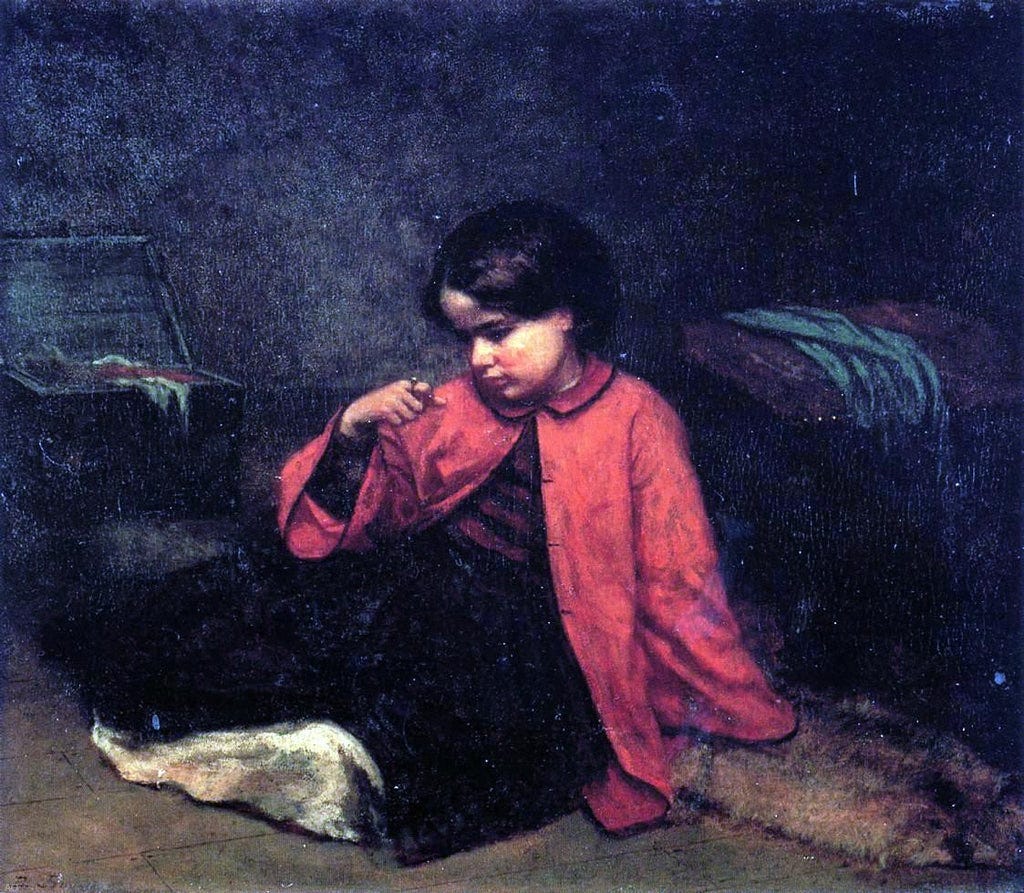
The most famous auction took place on February 5, 1860, when the congregation contributed ca. $1,100 in money and jewelry to buy the freedom of a light-skinned enslaved girl named Sally Maria Diggs. (She was so fair-skinned she was nicknamed “Pinky.”2) One piece of jewelry was an opal ring donated by the author Rose Terry. When Beecher saw it in the collection plate, he allegedly placed the ring on Sally’s hand, saying, “With this ring I do wed thee to freedom.” Sally later took the name Rose Ward in honor of her benefactors.3
But back to the statue.
Unveiled on June 24, 1891—less than five years after Beecher’s death—it is among J.Q.A. Ward’s finest works, if not the finest.
It originally sat in front of what was then Brooklyn City Hall (today Borough Hall), though the creation of Cadman Plaza necessitated its removal to the other end of Columbus Park.4
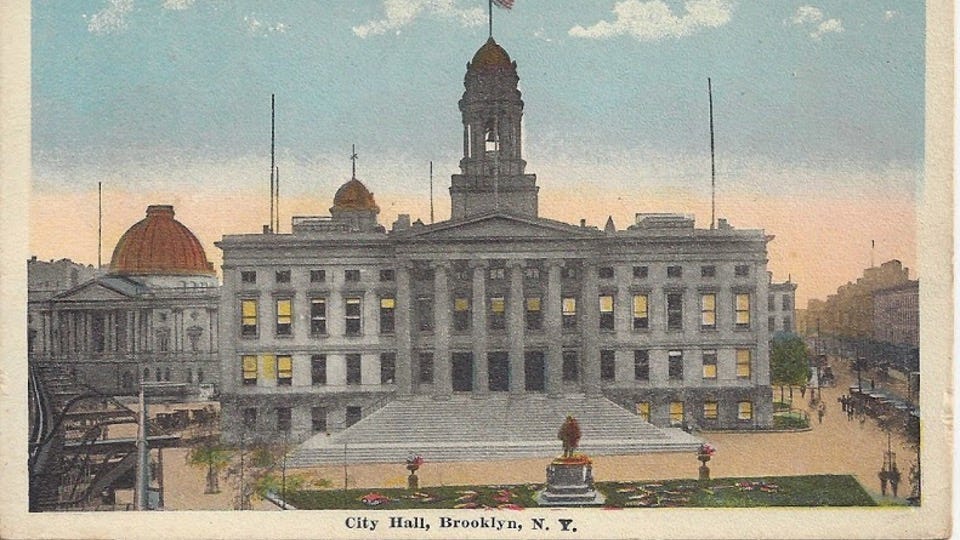
The erection of the statue coincided with a growing interest in Decoration Day, as Memorial Day used to be known. New York was one of the first states to adopt the holiday, making it official in 1873, and part of the commemorative festivities included decorating the graves and statues of fallen soldiers and sailors.
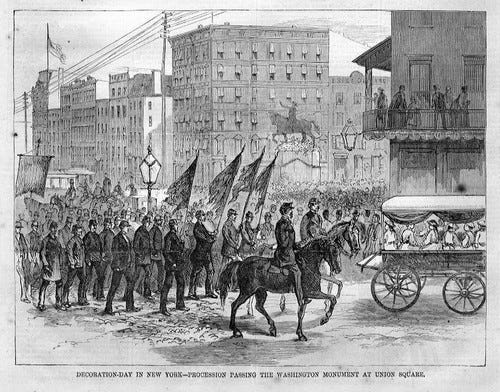
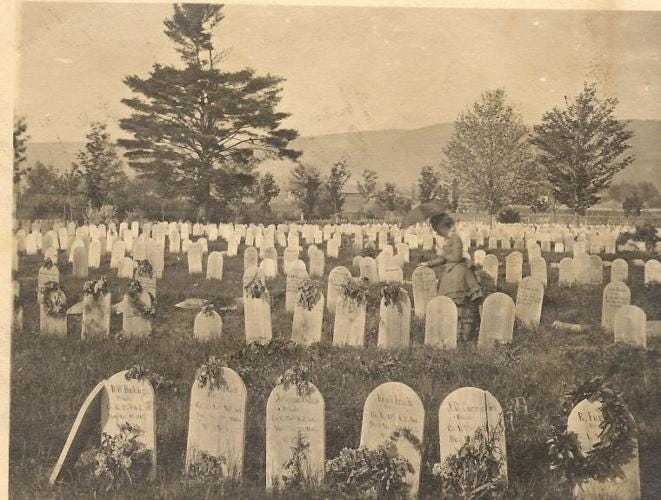
This tradition of decorating graves lives on—you will often see a profusion of flags pop up in cemeteries around Memorial Day weekend—but our propensity toward also decorating statues has declined. So, when people see the statue of Henry Ward Beecher in Cadman Plaza in Brooklyn, they might not immediately recognize the subtle subversion of the norm that the sculptor has worked into the composition.
On the left side of the pedestal (a granite plinth designed by Richard Morris Hunt), a formerly enslaved woman places a palm frond as a symbol of peace. On the right side, two children are caught in the act of beginning to wrap the base of the statue with flowers. With this small gesture, J.Q.A. Ward elevates the civilian Beecher to the role of Civil War combatant, thus recognizing his crucial role in the Union’s victory—and recognizing it 365 days a year.
…and, in others news…
There are still tickets available for this week’s talk: $24 Worth of Beads: Exploring the Myth of Manhattan’s Founding, where I will take a hard look at New York City’s foundational story. Spoiler alert: there were no beads. The talk is on Zoom on Thursday, May 28 (which is, give or take, the 400th anniversary of the fabled purchase), and if you can’t attend that night, your registration fee also covers a recording of the talk.
If you’re interested, go to https://www.nyhistory.org/programs/virtual-presentation-exploring-the-myth-of-manhattans-founding?date=2026-05-28
Then, on Sunday, June 7, I’ll be trekking around the Lower East Side in person looking at 400 years in that neighborhood, from pre-contact to Dimes Square.
More details and tickets at: https://www.walknyc.com/events.html
Thanks for reading!
stories persist that the guns were shipped to Kansas in crates marked “Bible from the Plymouth Church, Brooklyn,” but this may be more myth than truth.
Beecher did not have to spell out to his audience that a nearly white enslaved girl was the product of sexual assault—maybe generations of such assault.
The ring was later donated back to the church and is sometimes on view there.
The move probably wasn’t necessary. Robert Moses was a putz.