
Figs and Thistles
and poetry and Greenwich Village and other thoughts

I’ve been burning my candle at both ends recently, so I thought I would return to Edna St. Vincent Millay’s A Few Figs from Thistles to make sure I was doing it right.
[How am I burning so brightly? For one, I’ve just released a score for a version of Sophocles’ Antigone that I’m adapting. It would warm the cockles of my heart if you’d take it for a spin on your favorite streaming service at https://tr.ee/eCiyuIT5Rl. I’d urge you to do it sooner, rather than later, before some reactionary politician tries to ban cockle-warming.1]
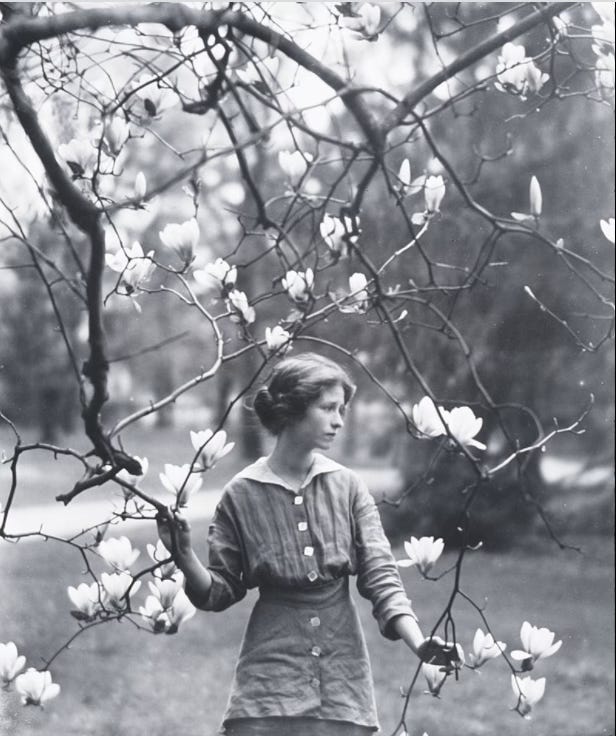
The volume begins with:
First Fig
My candle burns at both ends;
It will not last the night;
But ah, my foes, and oh, my friends—
It gives a lovely light!
Is that Millay’s most quoted poem? The internet couldn’t answer that question for me. The idea of burning a candle at both ends was not original to her; indeed, it can be dated back to the 17th century (in French) and the 18th (in English), originally meaning to be profligate. Candles weren’t cheap—to burn one at both ends was to be especially wasteful. By the 19th century, the modern sense of being overextended had taken hold, and I’m sure Millay’s poem helped spread that meaning.
Second Fig
Safe upon the solid rock the ugly houses stand:
Come and see my shining palace built upon the sand!
I much prefer the second poem—and, in fact, much of the rest of the slim volume—to that opening salvo. Fig the Second has also been on my mind lately. As our country slides into its era of tinpot-dictator aesthetics, I can’t decide if graven statues of the president or the redecorated Oval Office are the ugly houses on solid rock or if they are the shining palaces on the sand. Beauty, as they say, is in the eye of the beholder. And I bet Vincent (her friends called her Vincent) Millay, who detested phoniness, would hate so much of our modern life. Millay created a true modernist manifesto when she wrote:
“Euclid alone has looked on Beauty bare.”
That’s from a different Millay volume, The Harp-Weaver, and Other Poems, published in 1923, the same year she won the Pulitzer Prize for poetry for The Ballad of the Harp-Weaver, A Few Figs from Thistles, and eight sonnets published in American Poetry, 1922: A Miscellany. She won the prize just before she moved into 75-1/2 Bedford Street in Greenwich Village, around the corner from the Cherry Lane Theatre and down the street from Chumley’s at 86 Bedford. After Chumley’s, 75-1/2 Bedford Street is probably the most mythologized house in Greenwich Village.
Eighty-sixing a persistent myth about Chumley's

If you’ve been reading the papers, you know that the Department of Justice has re-indicted James Comey, the former director of the FBI, for posting a photo on Instagram of seashells spelling out the numbers 8647. This is, allegedly, a coded incitement to violence because “86” means to have run out of an item (or to get rid of something in restaurant sla…
As someone who’s been leading architecture and history walks in Greenwich Village for 25 (!) years, 75-1/2 Bedford has been a constant in my life. No matter what the theme of the walk—literary, architectural, off-the-beaten-track, et al—you can’t not visit Millay’s tiny home. It’s only 9-1/2 feet wide!
I actually have a lot of other points of intersection with Millay: family ties to the Camden/Rockland area in Maine, playwriting, poetry, an uncle who was trapped in a ship’s cargo hold for nine days and saved at St. Vincent’s Hospital.
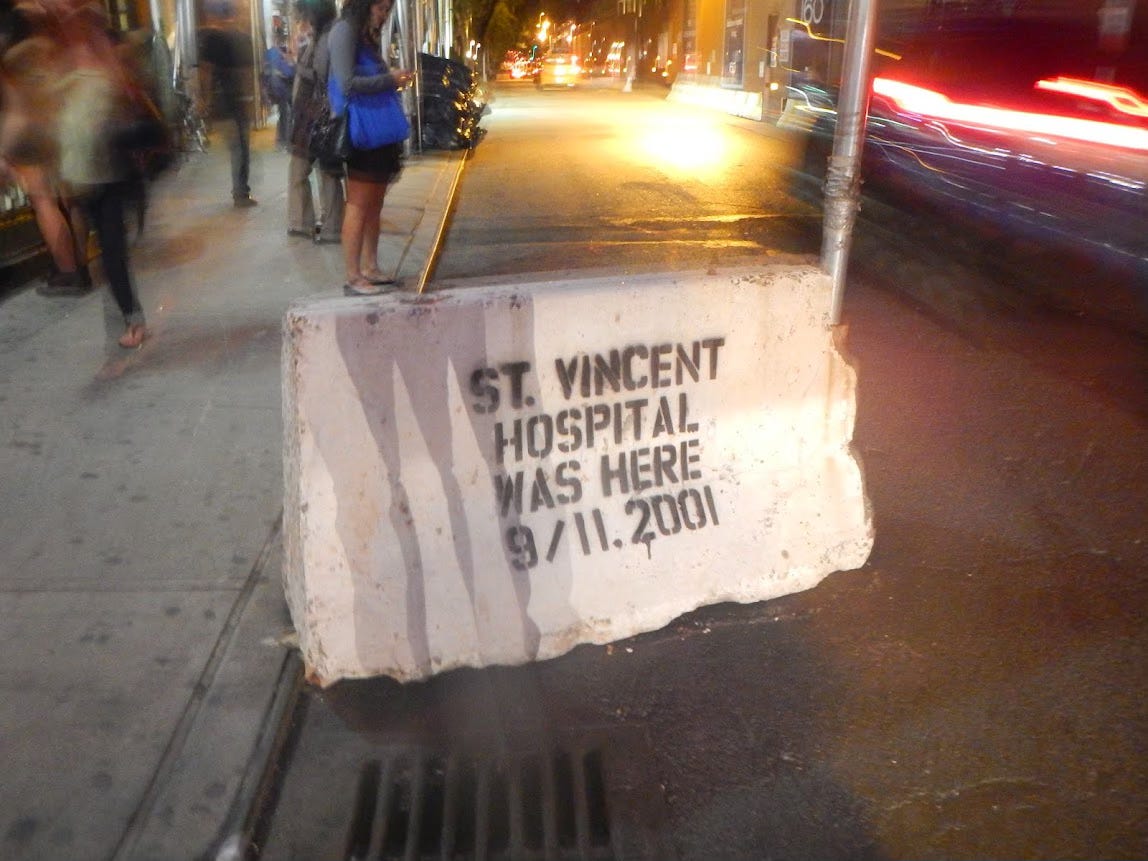
The remainder of this article is for paid subscribers only. If you want to know more about my poor uncle, subscribe today or, at the very least, sign up for a free trial. Your support is very much appreciated.
